
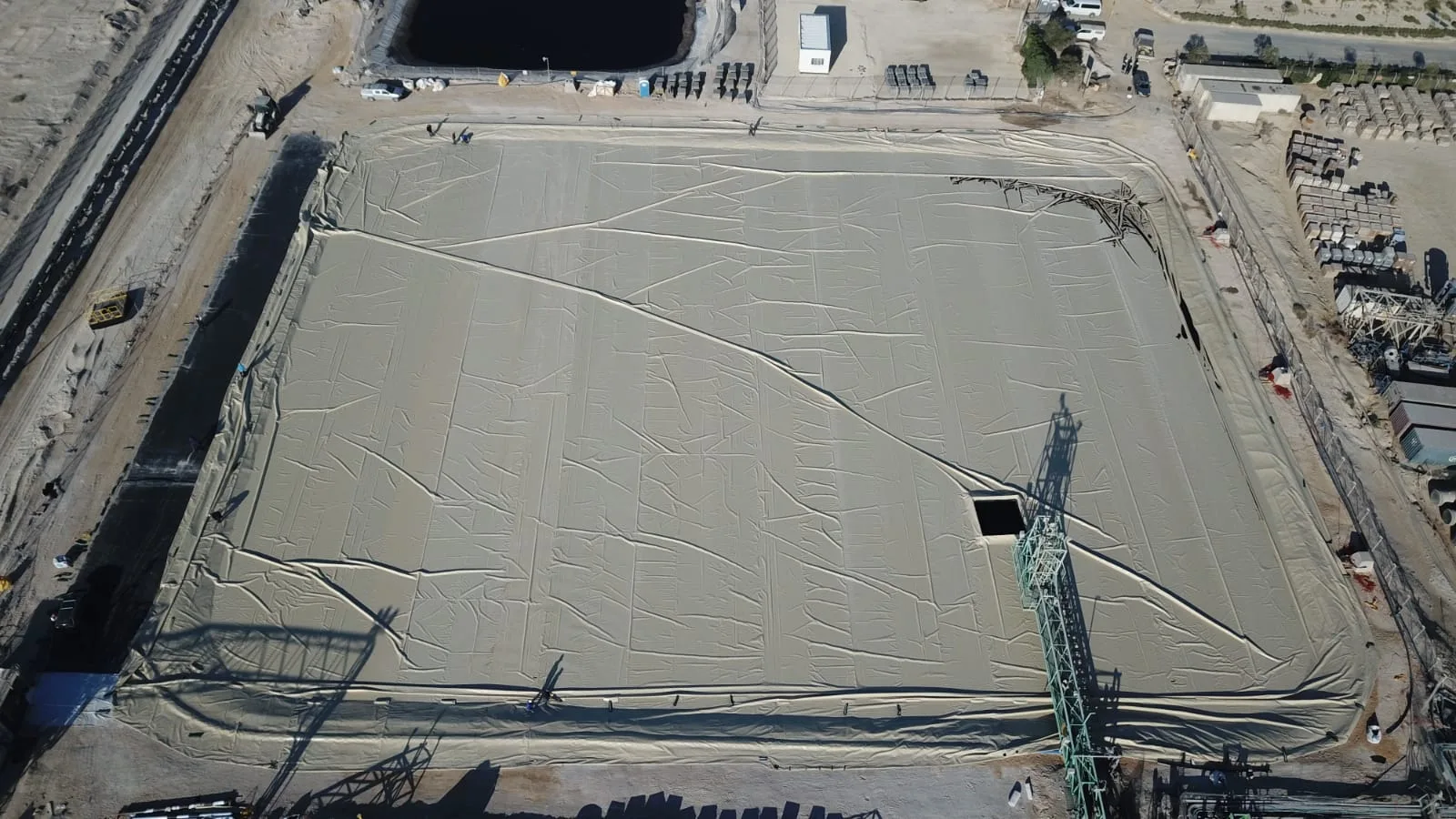
Material selection for the stored liquid and exposure
Options include reinforced polypropylene, LLDPE and CSPE, also referred to in some specifications as CSP. The selected grade must suit the liquid, operating temperature, sunlight exposure, movement and seam method. Reinforcement type and membrane construction are identified in the material schedule.
Potable-water applications need the relevant approved grade and supporting certification. Process-water and gas-containment projects require their own compatibility and system-design review. A material family name is not evidence of suitability for every liquid or operating condition.
Reservoir geometry becomes a panel plan
Fabrication starts with surveyed plan dimensions, perimeter details, operating water levels, obstructions and access points. The panel plan defines seam locations, factory sections, remaining site seams and the sequence for folding, transport and deployment.
We fabricate floats and integrate the specified enclosures and attachment details. Ballast arrangements, rainwater channels, sumps, hatches, vents and penetrations are coordinated with the cover design. Flotation and anchoring must function across the operating-level range, not only at one water level.
Factory welding and material-specific testing
The welding procedure identifies the material, equipment, preparation, settings and trial-seam requirements. Panel IDs and seam records link the completed assembly to the material batches and fabrication drawing. Visual inspection, destructive seam testing and suitable non-destructive checks are selected for the membrane and joint configuration.
ASTM D6392 addresses nonreinforced thermofusion geomembrane seams. Reinforced polypropylene and CSPE assemblies require the applicable material-specific seam procedures and acceptance criteria. Air-channel and vacuum-box methods are used only where suitable for the seam and material.
Exposure life and handover evidence
For projects seeking up to 30 years of exposed service, we review the selected grade’s manufacturer evidence, warranty terms, climate and operating conditions. The proposal distinguishes design life, exposure evidence and product warranty, and identifies inspection and maintenance requirements.
The handover scope can include the approved layout, material certificates, seam and repair records, float and component details, deployment sequence and the remaining site test plan. Installation, anchoring and commissioning are included where contracted.
Manufacturing inspection and release
| Control area | Evidence defined in the project inspection plan |
|---|---|
| Material and layout | Grade, reinforcement, compatibility documents, reservoir survey and panel plan. |
| Factory seams | Qualified procedure, trial seams, applicable tests, repairs and traceability. |
| System components | Floats, ballast, sumps, penetrations, packing sequence and site interfaces. |
Applicable methods, sampling frequencies, acceptance limits and independent testing requirements are agreed for the supplied grade and manufacturing scope.
Request a manufacturing proposal
Reservoir survey and dimensions, operating levels, liquid and temperature, material preference, exposure-life requirement and component layout.
Request a manufacturing quoteJohannesburg: sales@geosynthetics.co.za
Cape Town: sales@geosyntheticsafrica.com