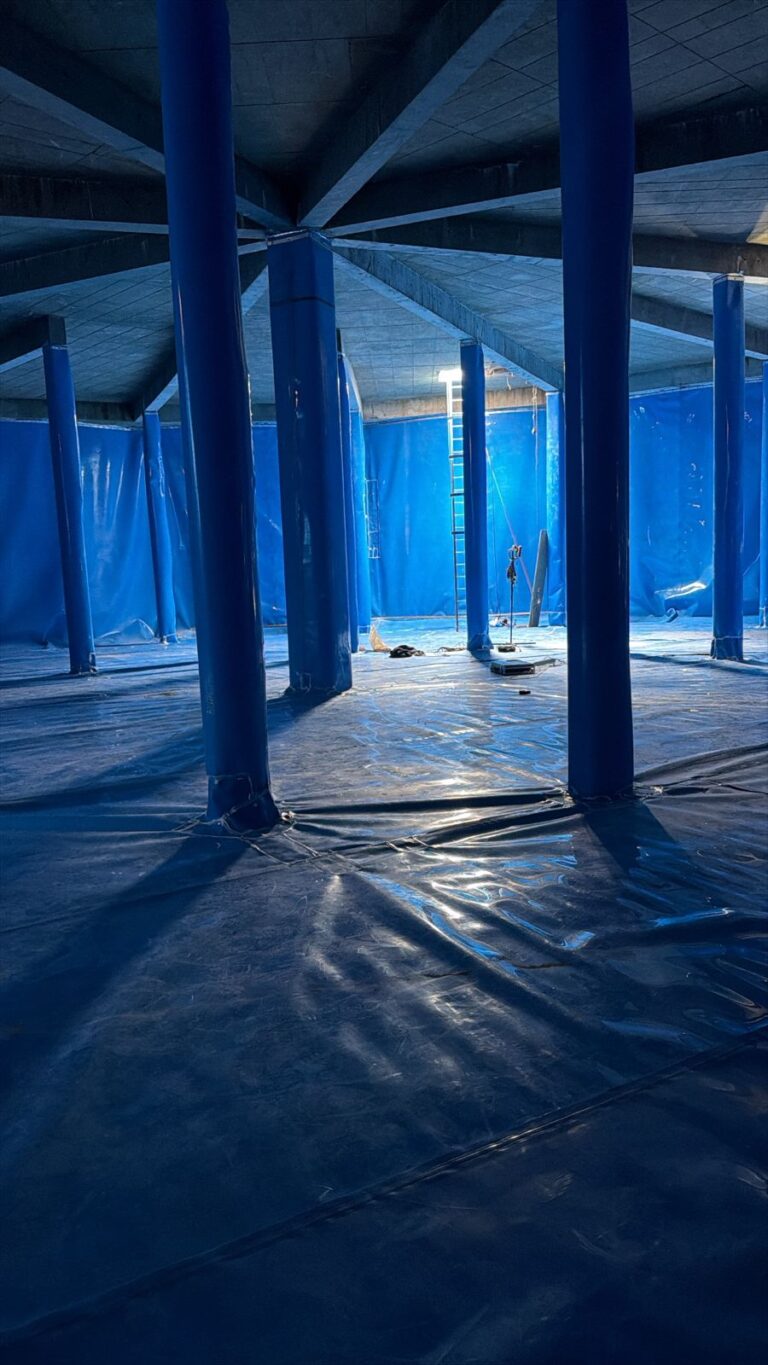
Soil Stabilisation – Amsterdam Bulk Water Scheme (Phase 4)
Soil stabilisation works using Tensar® biaxial geogrid TGSG 20 to support critical bulk water infrastructure under the Amsterdam Bulk Water Supply Scheme, South Africa.
Amsterdam Bulk Water Supply Scheme – Phase 4
Project Overview
The Amsterdam Bulk Water Supply Scheme – Phase 4 forms part of a critical municipal infrastructure programme aimed at strengthening long-term water security through major civil and earthworks construction.
As with many bulk water and municipal infrastructure projects in South Africa, construction activities were required to proceed over variable and locally weak subgrade soils, presenting challenges related to load support, constructability, and material efficiency.
To address these challenges, Tensar® Biaxial Geogrid TGSG 20 was deployed as a soil stabilisation and ground improvement solution, enabling improved subgrade performance while optimising the use of imported aggregates.
Engineering Challenge: Weak Subgrades & Material Efficiency
Bulk water infrastructure projects typically involve:
-
Extensive earthworks and platform construction
-
Heavy construction traffic and plant movement
-
Access roads, working platforms, and structural layers built over marginal soils
On this project, untreated subgrade conditions presented a risk of:
-
Excessive rutting and deformation
-
Reduced bearing capacity under construction loads
-
Increased dependence on thick aggregate layers to achieve stability
Traditional “dig-and-replace” approaches would have resulted in higher aggregate volumes, increased haulage, extended construction timeframes, and elevated project costs.
Geotechnical Solution: Tensar® Biaxial Geogrid TGSG 20
To mitigate these risks, Tensar® Biaxial Geogrid TGSG 20 was incorporated into the pavement and working platform build-up to form a Mechanically Stabilised Layer (MSL).
Why Tensar TGSG 20
Tensar TGSG 20 is a biaxial polypropylene geogrid engineered to stabilise soils and aggregates by:
-
Promoting mechanical interlock between aggregate particles
-
Restricting lateral movement under applied loads
-
Increasing the effective stiffness of the composite soil–aggregate layer
-
Improving load distribution across weaker subgrades
This performance mechanism is well documented by Tensar International for roads, working platforms, access routes, and infrastructure foundations.
Application & Installation Overview
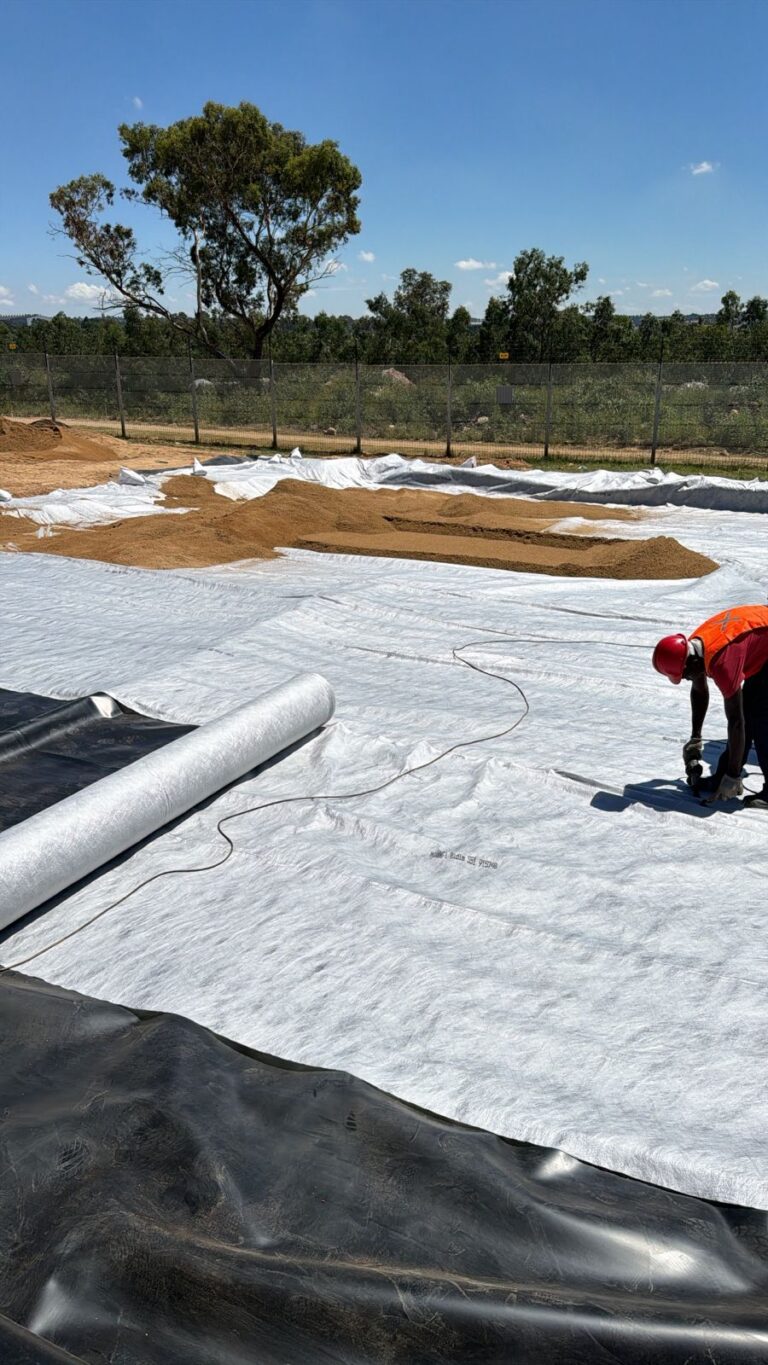
The geogrid was installed directly over prepared subgrade surfaces, followed by placement and compaction of engineered aggregate layers in accordance with recognised geosynthetics installation practices.
Typical installation methodology included:
-
Subgrade preparation to line and level
-
Placement of Tensar TGSG 20 biaxial geogrid over weak soils
-
Correct overlap and alignment to ensure continuity of reinforcement
-
Placement of aggregate cover layer
-
Compaction to specification to activate interlock
This approach allowed the formation of a stable working platform capable of supporting construction loads while limiting deformation.
Performance Outcomes
Improved Soil Stability
The use of Tensar TGSG 20 significantly enhanced subgrade performance by creating a reinforced composite layer that improved bearing capacity and resistance to deformation.
Optimised Aggregate Usage
Consistent with Tensar International design guidance, the stabilised layer enabled reduced reliance on excessive aggregate thicknesses when compared to unreinforced construction over weak soils.
This translated into material efficiency benefits without compromising performance.
Tensar International documentation confirms that biaxial geogrids are routinely used to reduce aggregate demand and improve pavement efficiency on weak subgrades; however, achievable reductions are project-specific and design-dependent.
Enhanced Constructability
Stable working platforms improved site trafficability, reduced construction delays, and supported efficient progress of civil works.
Long-Term Infrastructure Performance
Improved load distribution and confinement contribute to the durability and serviceability of infrastructure layers over the design life of the asset.
Role of Geosynthetics Africa
Geosynthetics Africa supplied Tensar® Biaxial Geogrid TGSG 20 as part of its broader capability to support soil stabilisation, ground improvement, and civil infrastructure projects across South Africa and the African continent.
With extensive experience in geogrids, geomembranes, geotextiles, and engineered geosynthetic systems, Geosynthetics Africa supports projects from design alignment through to material supply and technical support, ensuring solutions are aligned with international best practice.
Conclusion
This project demonstrates the proven effectiveness of Tensar® Biaxial Geogrid TGSG 20 for soil stabilisation in municipal bulk water infrastructure applications.
By reinforcing weak subgrades and optimising aggregate usage, the geogrid solution delivered improved constructability, material efficiency, and long-term performance.
Geogrid-based stabilisation remains a cost-effective, technically robust solution for civil, municipal, mining, and infrastructure projects across Southern Africa.
Products Supplied
| Product | Description | Primary Applications |
|---|---|---|
| Tensar® Biaxial Geogrid TGSG 20 | High-performance biaxial polypropylene geogrid designed for soil stabilisation and ground improvement on weak subgrades, improving load distribution and reducing reliance on excessive aggregate layers in civil and infrastructure works. | Soil Stabilisation & Ground Improvement; Municipal Water Infrastructure; Roads & Access Platforms; Bulk Earthworks; Infrastructure Foundations |